Sahara
Footprints on the Erg Chebbi
Three nights at the edge of Morocco's great sand sea, where the wind erases every trail by morning and the stars come all the way down to the horizon.
- Location
- Erg Chebbi, Morocco
- Coordinates
- 31°09′N 3°58′W
- Published
- Reading time
- 3 min read
The road from Marrakech climbs over the High Atlas by the Tizi n'Tichka pass, drops into a country of red kasbahs and palm-filled gorges, and seems to run out of reasons to continue somewhere past Rissani. Then the dunes appear, a long orange wall on the horizon, and they do not look real.
Erg Chebbi is not the biggest sand sea in the Sahara, but it rises suddenly out of flat, stony desert, some of its crests well over a hundred metres high, and walking up to it feels like reaching the edge of an ocean that has stopped moving.
Walking the ridge
We rode in by camel in the late afternoon, which is slower and less comfortable than anyone admits, then climbed the tallest ridge near camp on foot. Sand gives way under every step. It took forty minutes to cover what looked like five.
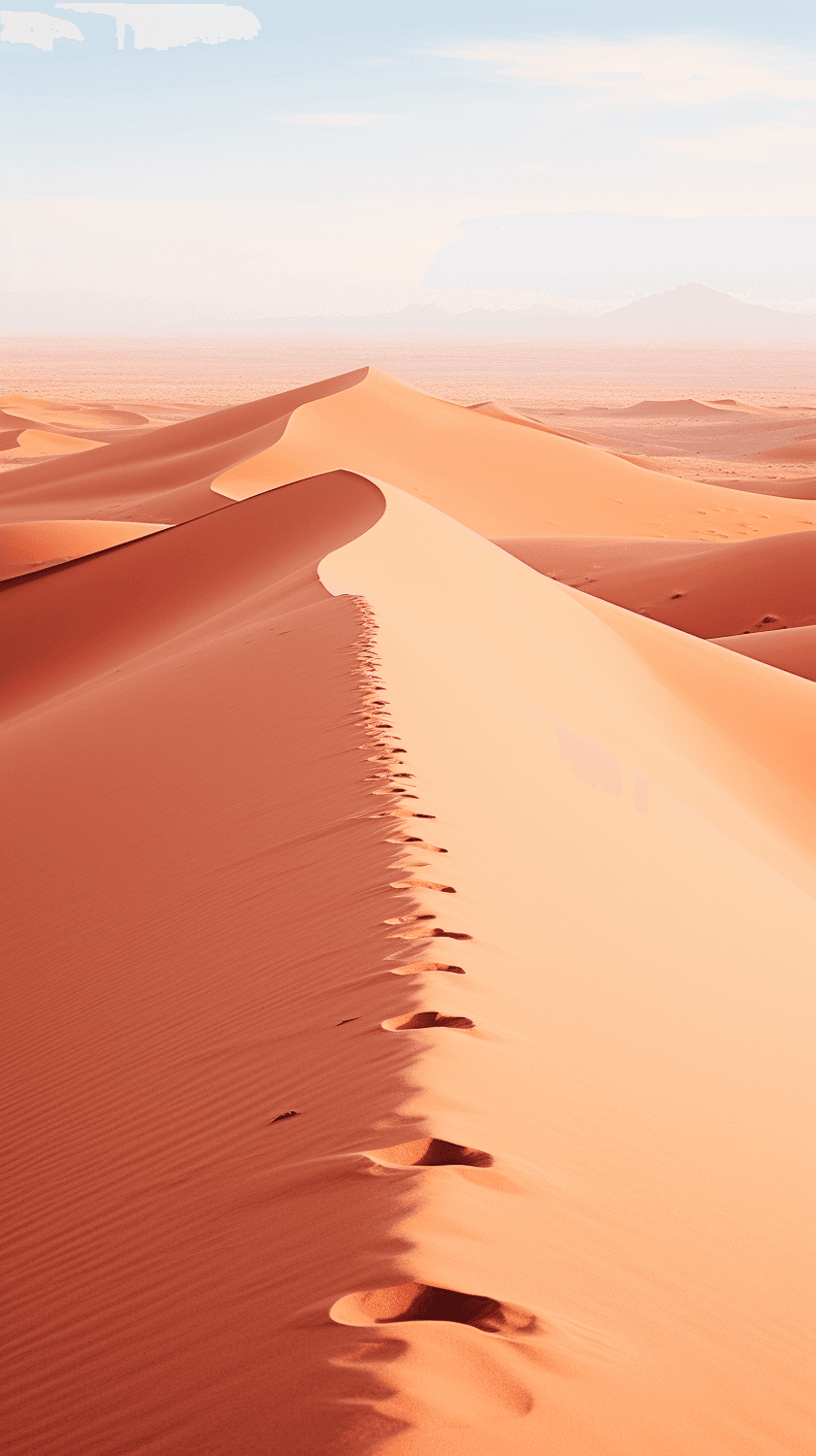
From the top the desert goes on in every direction, crest after crest, each one sharp as a blade on its sunlit side and soft with shadow on the other. The wind had already started on our footprints by the time we sat down.
Every morning the desert is new. The wind sees to that.
Nights at camp
Camp was a ring of tents around a fire, run by an Amazigh family who have hosted travellers in these dunes for years. Dinner was a tagine slow-cooked over coals, then mint tea poured from a height, then drums. When the fire burned low, someone switched off the generator and the sky took over. With no town for miles, the stars run all the way down to the horizon.
On the last night a wind came up and hissed sand against the tent walls until dawn. Nobody slept much. Nobody minded.
Sunrise from the crest
We climbed back up in the dark for the sunrise. The light arrives as a thin red line, then a rush of orange that runs down the faces of the dunes one by one, like someone switching on the lights in a vast, empty house. By seven the colour was gone, the sand was plain gold, and the camels were already kneeling for the ride out.
Field notes
When to go: October to April. Summer days pass forty degrees and are hard work.
Getting there: Merzouga is a long day's drive from Marrakech. Break it with a night in the Dades or Todra gorges.
Where to stay: Choose a small desert camp over a large one, and ask how far it sits from its neighbours.
Do not miss: Gnawa music in the village of Khamlia, a few kilometres south of Merzouga.